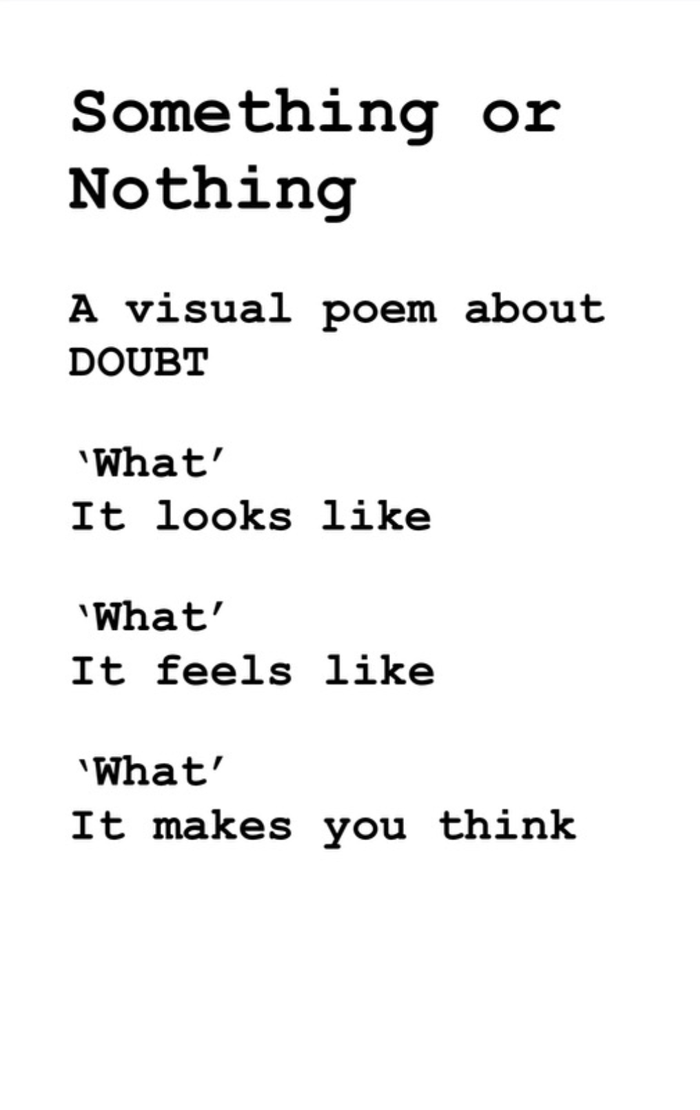
Something or Nothing, A Visual Poem
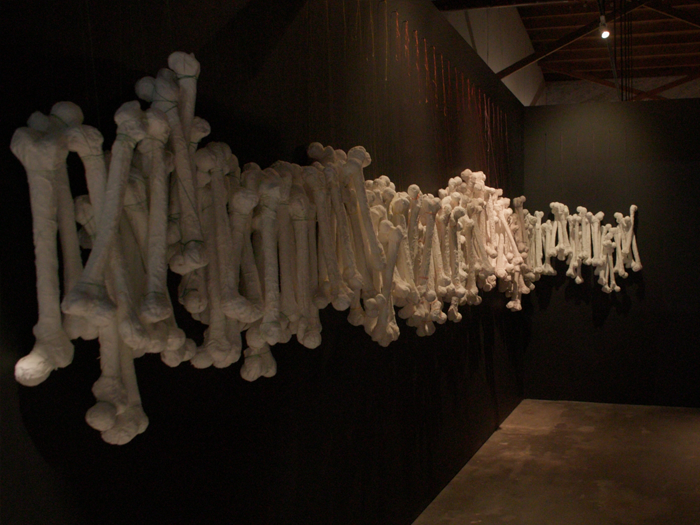
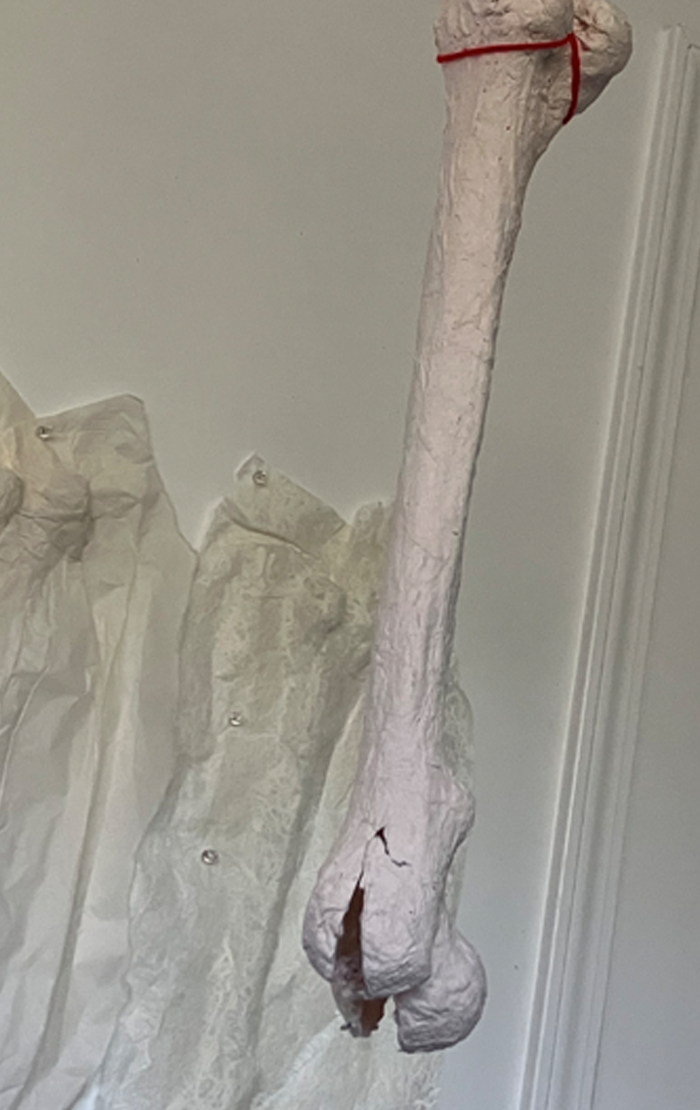
In the summer of 2023, I faced a creative crisis that left me questioning the value and direction of my work. During this period, I encountered a Zen story in which a disciple asks his Sensei how to cope with doubt. The Sensei replies, "Once in doubt, it feels as if all the bones in your body are on fire."" This vivid image shifted my perspective, transforming doubt from a paralyzing force into a tool for artistic inquiry.
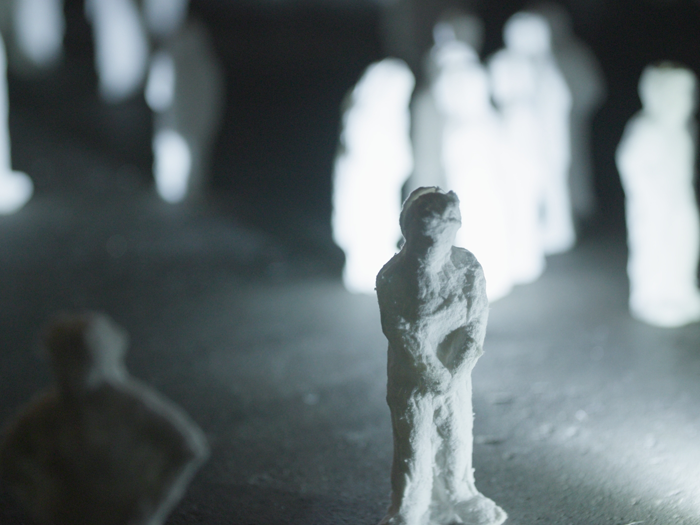
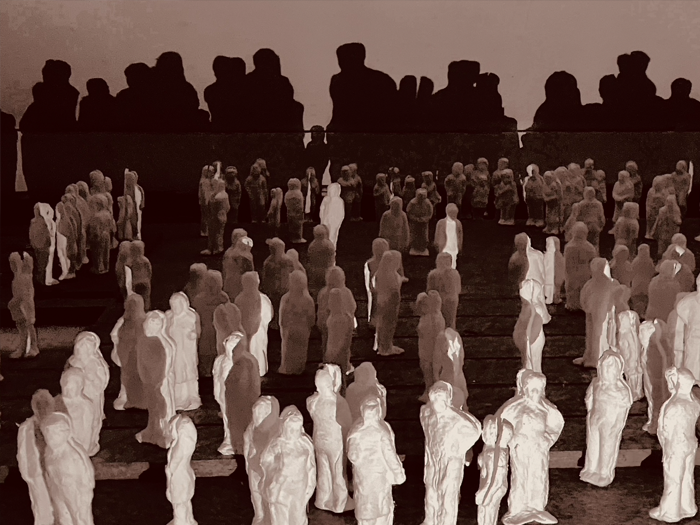
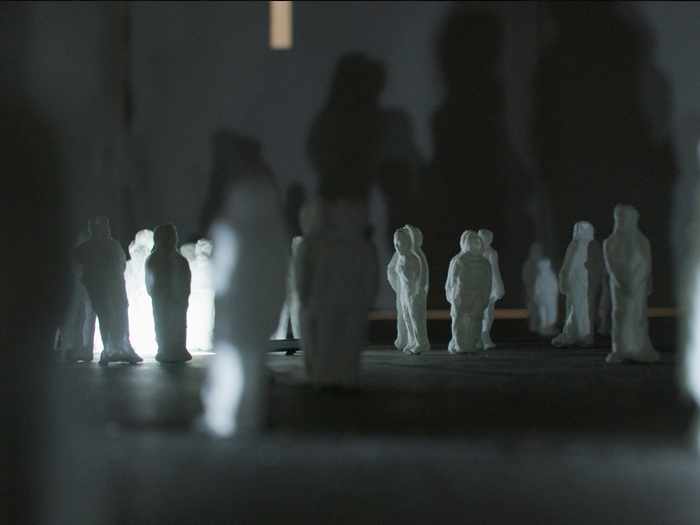
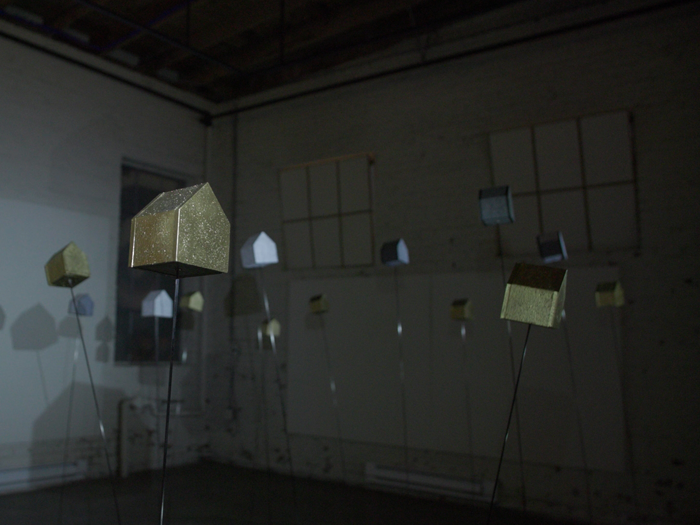
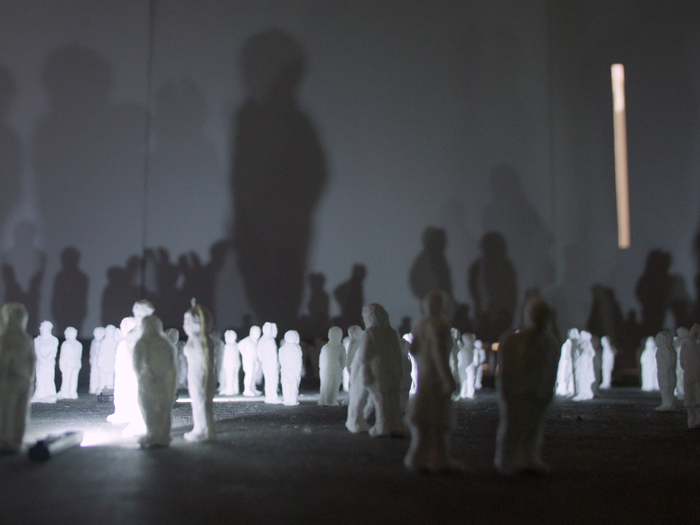
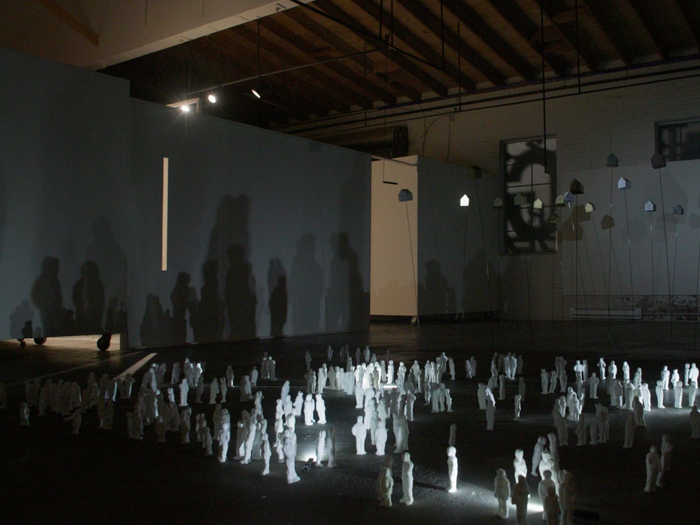
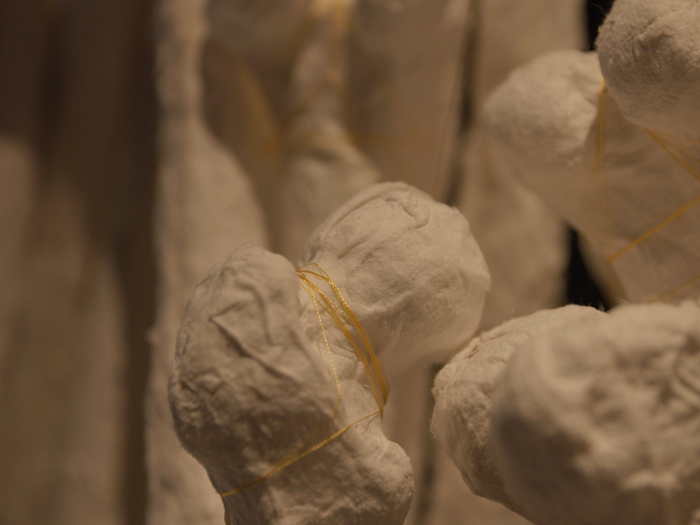
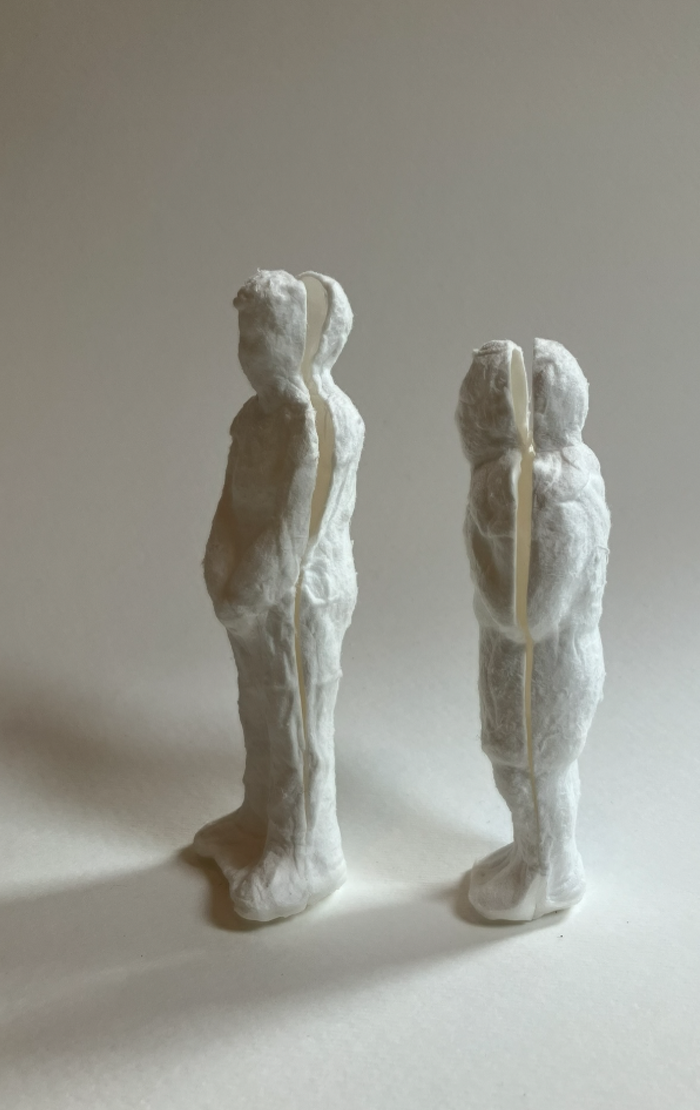
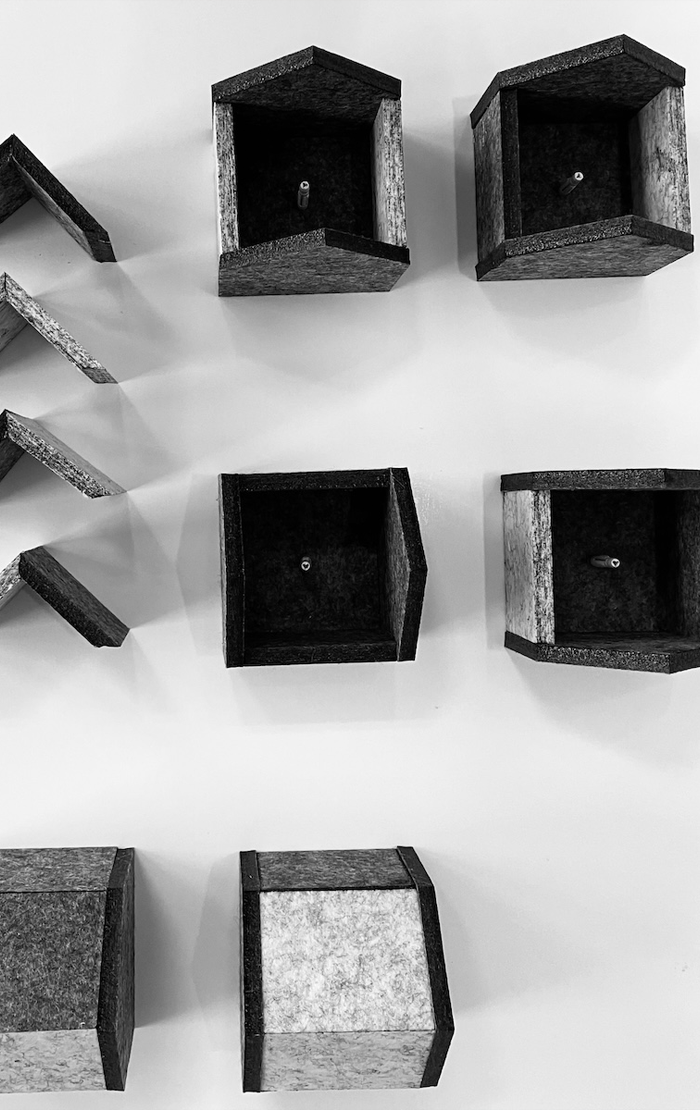
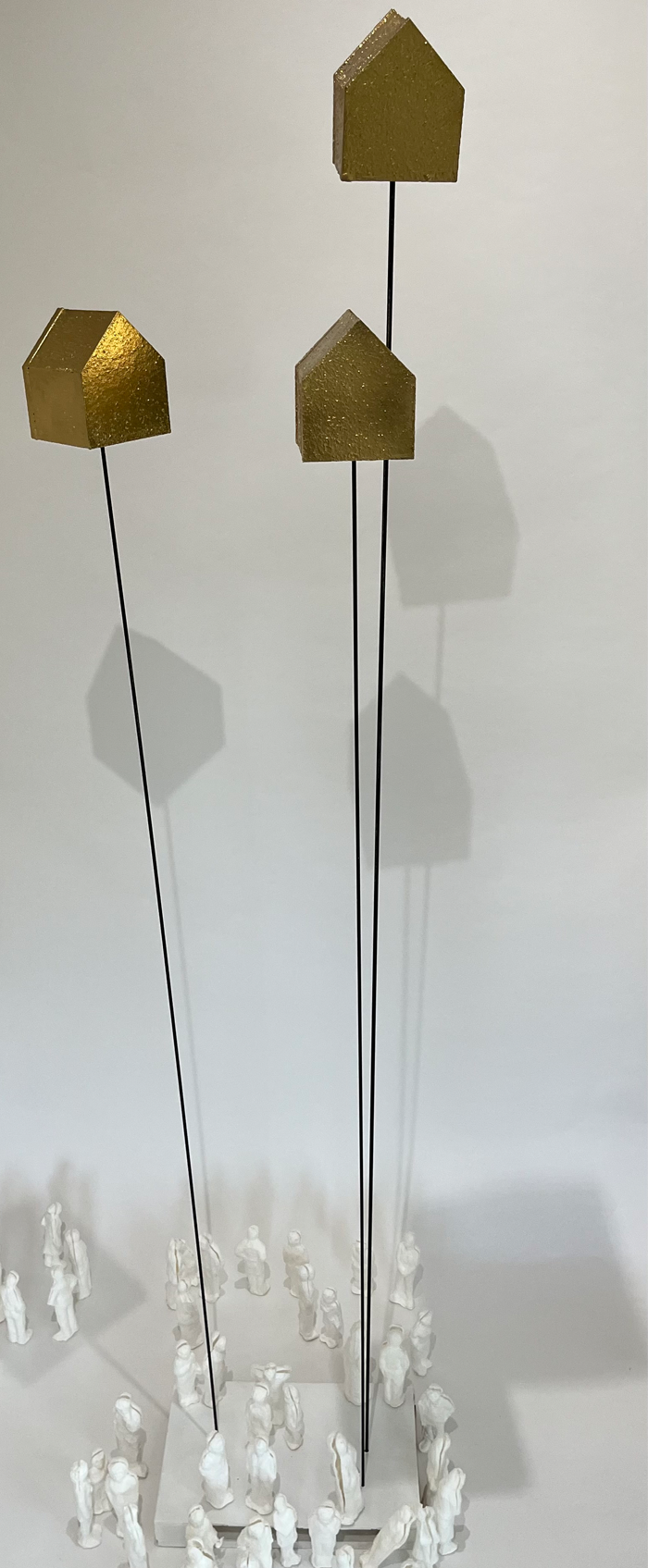
In response, I cast 206 life-sized femur bones-the total number in the adult human body—and 364 six-inch cotton figures. Their hollow interiors evoke a duality: Does emptiness signify paralysis or possibility? Does it isolate or create space for connection? Suspended from the ceiling with colored threads, the bones form a fragmented structure, their soft materiality contrasting with their morbid form. Among them are 26 gold-colored houses (4x4x4 inches), each mounted on six-foot carbon rods. Though appearing sturdy, these houses sway with the air currents, teetering between balance and instability.
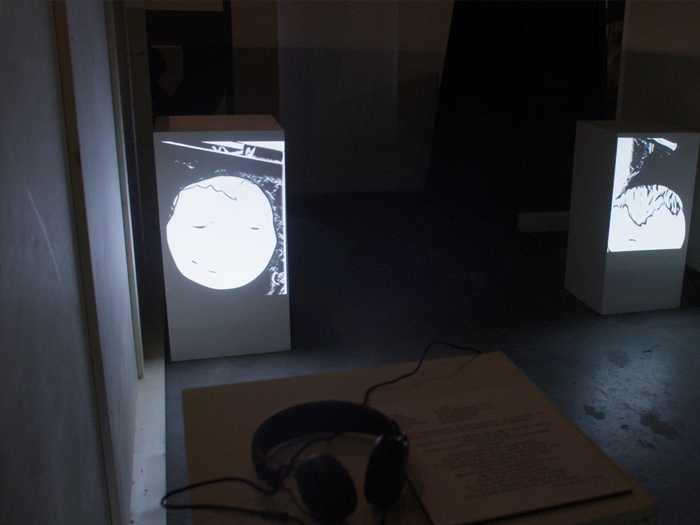
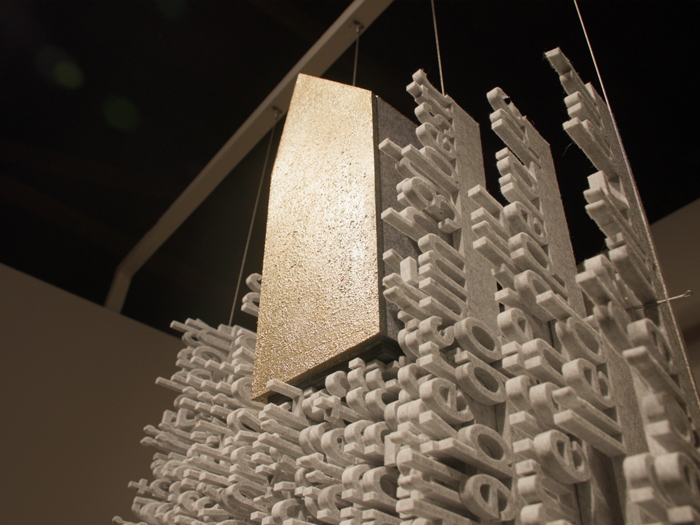
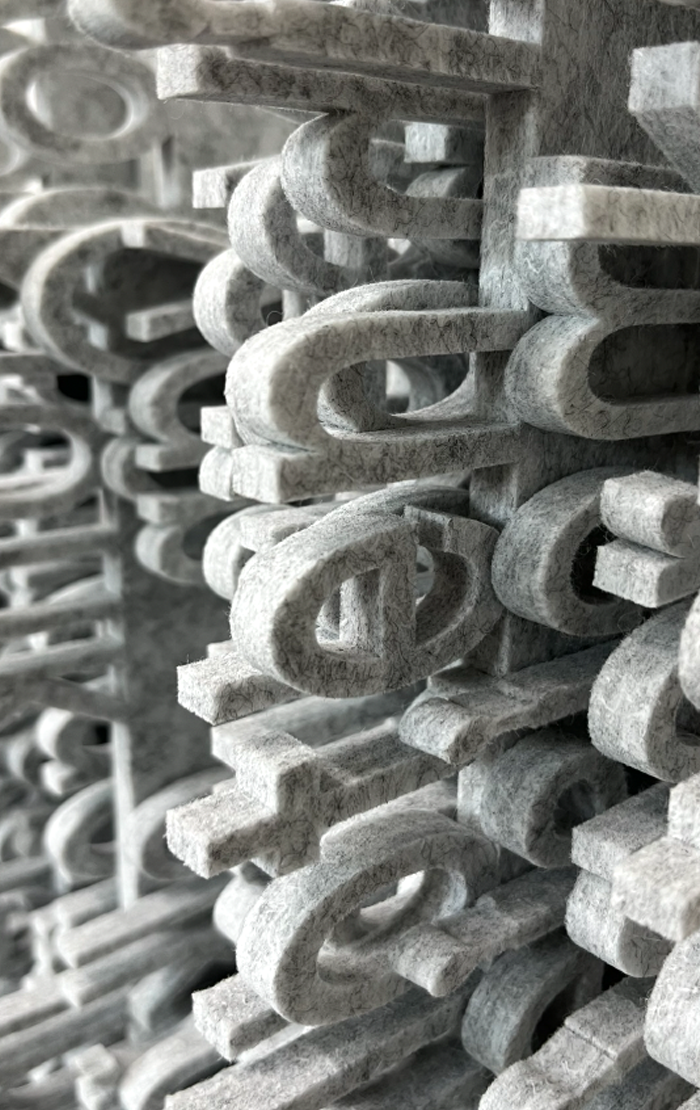
A separate gilded house (8x11x14.5 inches) is set upon a foundation of chaotic, unreadable words laser-cut from recycled sound-absorbing material. Nearby, a black-and-white video loop features two abstract heads—one nodding "yes," the other "no"—accompanied by a heartbeat and a reading of a 1542 sonnet by Giovanni Battista Barbaro. The poem warns against doubt, portraying it as a force that immobilizes.
While Something or Nothing, A Visual Poem began as a meditation on my uncertainty, it ultimately explored the paradox of doubt itself. Through empty bones, split-open figures, and shifting houses, I examine the unmoored experience— having no ground beneath your feet. My artistic practice and my background in psychology complement each other seamlessly. Yet, in doing so, I uncover doubt’s value: its ability to foster openness and adaptability. This work asks whether doubt is a void or an opening, a state of hesitation or a catalyst for transformation. Ultimately, the creative process exists in the fragile balance between doubt and certainty—between not knowing and the desire to learn.
If doubting had feet and life
One would never see it moving forward or backward.
If it had a tongue, it would not be able to either speak or be silent,
either successfully or unsuccessfully.
If it had shoulders, arms, hands, and fingers
It would never want to begin or end a piece of work And finally placed between life and death
It would neither die or live.
Hence it would be a displeasure to nature Hell, the world of heavens
To see such a stolid creature.
So it was wisely decided by the College That it be shapeless, without a figure Without feet, without hands , without a face.
—Barbaro 1542